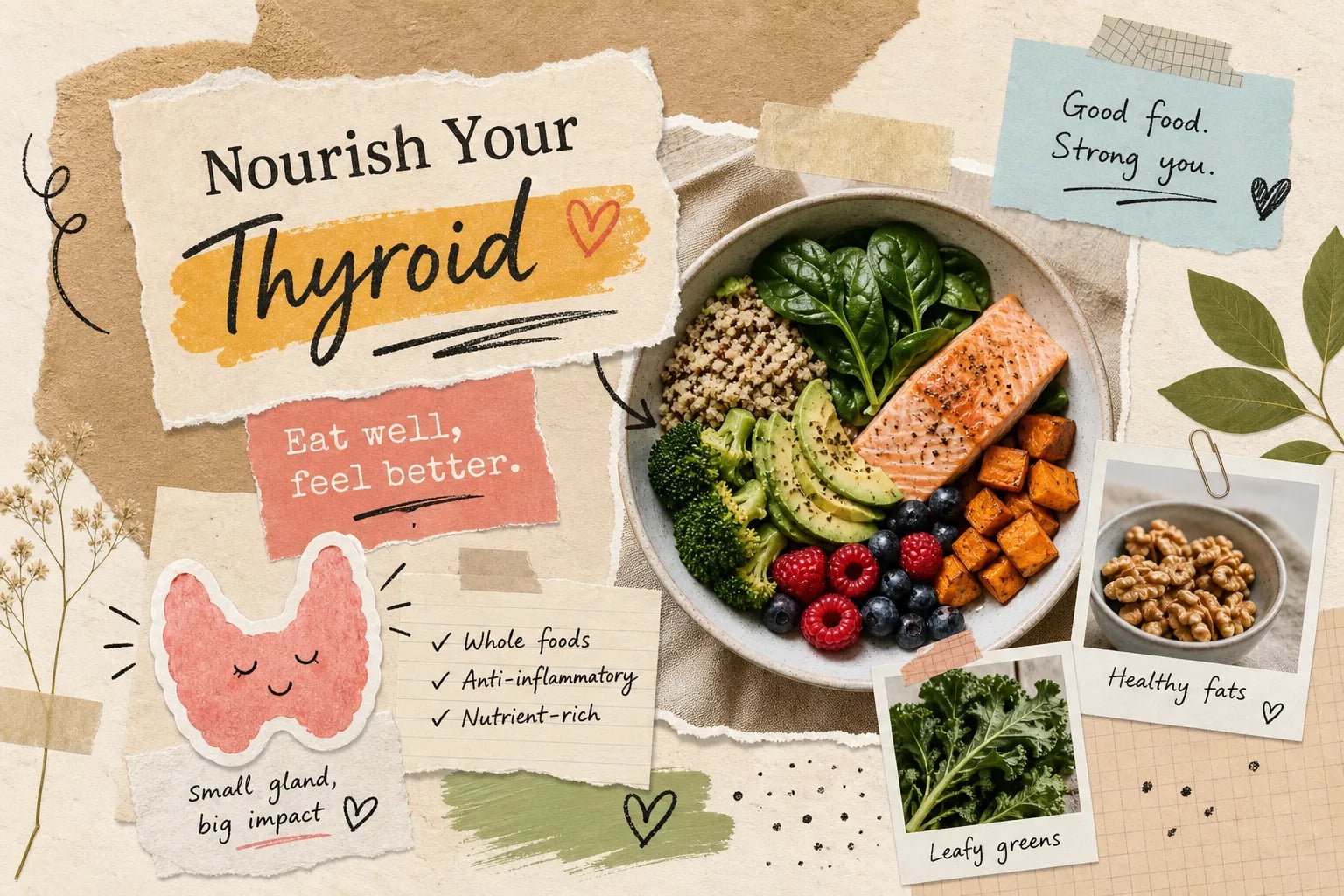
Managing Hashimoto’s thyroiditis through food is not about building the longest possible list of things you can’t eat. The real work happens on the other side of that equation: identifying which foods actively reduce inflammation, support thyroid hormone conversion, and reinforce the gut barrier that plays a much larger role in autoimmune disease than most people realize.
Hashimoto’s is an autoimmune condition first and a thyroid condition second, that distinction shifts the entire focus of your food choices. You’re not just managing a slow thyroid; you’re working at the root cause level to reduce your immune system’s attack on your own thyroid tissue. Diet is one of the most important modifiable factors within a broader management approach, and it works best when it’s tied to your actual lab values rather than a generic elimination protocol.
What follows covers the food categories that matter most: selenium-rich foods, anti-inflammatory fats, gut-healing fermented foods and bone broth, and the truth about goitrogenic vegetables. You’ll also find a 7-day meal plan framework to put it all into practice. One thing to hold onto before you start: a true Hashimoto’s-supportive eating plan looks different for every person. I do not do protocols. I do people.
Selenium-rich foods that support thyroid hormone conversion
Selenium is a cofactor your body requires to convert inactive thyroid hormone (T4) into the active form (T3) your cells can actually use, a process carried out by selenium-dependent deiodinase enzymes. Some meta-analyses have found that adequate selenium intake may modestly reduce TPO antibodies over time, though the evidence is mixed and the clinical magnitude varies by individual. This section stays focused on food sources because the goal here is food first, supplements second, and food sources carry far less toxicity risk than supplemental doses.
Brazil nuts: a daily dose in one or two bites
One to two Brazil nuts per day can deliver your full daily selenium requirement. A single nut contains approximately 68 to 91 mcg of selenium, and the recommended daily intake for adults is 55 mcg. That’s an efficient, low-effort way to hit your target without reaching for a supplement. Selenium toxicity is a real clinical risk at higher intakes, so stopping at two nuts is a clinical boundary, not a loose suggestion.
Seafood sources with high bioavailability
Oysters, yellowfin tuna, and sardines are excellent, highly bioavailable selenium sources that also supply zinc, a nutrient involved in thyroid hormone metabolism and immune regulation. Zinc is most clinically relevant when deficiency is present, but these seafood options remain particularly valuable in a thyroid-friendly eating plan because of the combined nutrient profile. Choose wild-caught or lower-mercury options when possible, and rotate varieties to maintain dietary variety.
Anti-inflammatory fats that calm the autoimmune response
Hashimoto’s is an inflammatory condition at its root, and what you eat either adds fuel to that fire or helps dampen it. A consistent anti-inflammatory eating pattern, the kind supported by Mediterranean-style dietary research, has more long-term impact on thyroid support than avoiding any single food on a fear-based list.
Cold-water fatty fish and why they target autoimmune inflammation
Wild-caught salmon, mackerel, and sardines supply EPA and DHA omega-3 fatty acids, which have been associated with lower levels of inflammatory cytokines, including those that can directly affect thyroid tissue. While Hashimoto’s-specific omega-3 trial data is still developing, the mechanistic case for reducing systemic inflammation in autoimmune conditions is well established. Aim for two to three servings per week as a realistic, sustainable starting target.
Plant-based fats that support cellular function
Avocados, extra-virgin olive oil, and ground flaxseed contribute to healthy cell membrane structure and support hormone signaling pathways. Ground flaxseed is preferable to whole flaxseed because grinding dramatically improves bioavailability. These fats also contribute to satiety and stable energy levels, which matters for women with Hashimoto’s who are managing fatigue and weight alongside thyroid symptoms.
Gut-healing foods that reduce autoimmune flares
A growing body of research links intestinal permeability to the initiation and progression of autoimmune disease. Higher zonulin levels, a marker of gut barrier disruption, have been observed in Hashimoto’s patients compared to healthy controls, supporting an association between gut integrity and autoimmune activity. Supporting the gut lining is not an optional add-on in a thyroid-supportive food plan; it is foundational to reducing autoimmune activity at the root cause level.
Fermented foods and the lactose versus dairy distinction
Kefir, sauerkraut, and kimchi are probiotic-rich foods that help regulate immune function through the gut-immune axis. Direct RCT evidence for these foods in Hashimoto’s specifically is still limited, but their role in supporting a healthy gut microbiome is well supported. Here’s a distinction that gets lost in most generic Hashimoto’s content: some people with Hashimoto’s report sensitivity to dairy or lactose, but that does not apply universally. Fermented, lower-lactose dairy options like kefir and Greek yogurt are appropriate for many people and should not be reflexively eliminated. Cutting all dairy based on blanket advice removes genuinely useful gut-supportive foods from your plan.
Bone broth and collagen for gut lining repair
Bone broth provides glycine and collagen peptides, which are raw materials the gut lining draws on for structural maintenance. Clinical trial evidence directly linking bone broth consumption to gut barrier repair in Hashimoto’s is limited, so think of it as a plausible, low-risk supportive food rather than an established therapy. That said, it’s cost-effective, easy to incorporate into soups and cooking liquids, and pairs naturally with the Mediterranean-style approach this plan is built around. Starting with one to two cups several times per week is a practical, low-effort way to include it.
The real story about goitrogenic vegetables
The internet has done an impressive job of convincing people with Hashimoto’s to fear broccoli. Cooked cruciferous vegetables do not meaningfully suppress thyroid function in people with adequate iodine intake, a description that fits most adults eating a varied diet in the United States, based on national nutrition surveillance data.
What “goitrogenic” actually means (and when it matters)
Goitrogens are compounds found in cruciferous vegetables, some legumes, and soy that can interfere with iodine uptake or thyroid peroxidase activity in very large quantities. The clinical concern is primarily relevant when someone is eating unusually large amounts of raw crucifers combined with low iodine intake. Neither condition describes most Americans following a balanced eating pattern.
How cooking changes the equation completely
Steaming cruciferous vegetables reduces their goitrogenic content by approximately two-thirds. Boiling for 30 minutes reduces it by up to 90%. Eating normal portions of cooked broccoli, kale, or Brussels sprouts does not create a meaningful thyroid risk for someone with adequate iodine intake. The cooking step is doing most of the work for you.
Why these vegetables belong in your Hashimoto’s eating plan
Cruciferous vegetables supply fiber that feeds a healthy gut microbiome, antioxidants that reduce oxidative stress on the thyroid gland, and sulforaphane compounds that support liver detoxification pathways. Removing them based on fear-driven online content strips away some of the most gut-supportive, anti-inflammatory foods available. Cook them, eat them, and rotate them through your meals without hesitation.
A practical 7-day Hashimoto’s-friendly meal plan
This meal plan is a starting framework, not a prescription. It’s built around a Mediterranean-style, anti-inflammatory pattern with adequate protein, selenium, zinc, omega-3 fats, and mostly minimally processed whole foods. The plan is intentionally gluten-reduced. Strict gluten elimination carries the strongest clinical evidence in people with confirmed celiac disease or non-celiac gluten sensitivity; for everyone else, reducing processed gluten sources is a reasonable starting point without the need for full elimination.
How the plan is structured
Each day targets approximately 25 to 30% protein, 35 to 45% carbohydrates, and 25 to 35% fat. A simple per-meal template to keep portions on track:
- Protein: 4 to 6 oz cooked fish, meat, or poultry; or 1 to 1.5 cups legumes
- Carbohydrates: 3/4 to 1 cup cooked grains or starchy vegetables
- Vegetables: 1.5 to 2 cups cooked or raw
- Fat: 1 tablespoon olive oil, half an avocado, or 1 to 2 tablespoons seeds or nut butter
If you take levothyroxine, wait 30 to 60 minutes before eating breakfast to prevent interference with medication absorption. That timing detail is small but clinically significant.
Sample days and grocery essentials
Three sample days to give the framework a practical shape:
- Day 1: Three-egg veggie omelet with spinach and half an avocado for breakfast; baked salmon over quinoa with roasted broccoli for dinner.
- Day 3: Smoothie with spinach, ground flaxseed, and mixed berries for breakfast; roast chicken thighs with mashed sweet potato and sautéed kale for dinner.
- Day 5: Vegetable frittata with leeks and herbs for breakfast; baked trout with Swiss chard and wild rice for dinner.
A foundational grocery list grouped by category to get you started:
- Proteins: eggs, wild salmon, sardines, chicken thighs, lentils, Greek yogurt or kefir
- Produce: spinach, kale, broccoli, Brussels sprouts, blueberries, sweet potatoes, avocados
- Fats: extra-virgin olive oil, Brazil nuts (1 to 2 daily), ground flaxseed, almond butter
- Gluten-free grains: quinoa, brown rice, wild rice, buckwheat, gluten-free oats
When a personalized Hashimoto’s food plan makes all the difference
A foundational food list gives you a starting point. What it cannot give you is a plan calibrated to your actual biology. Your TSH, free T3, free T4, TPO antibody levels, ferritin, vitamin D, and gut markers all influence which specific dietary strategies will move the needle for you, specifically. General recommendations can only take you so far.
Why labs should drive your food strategy
There is a meaningful gap between standard reference ranges and optimal ranges, and that gap is where many women with Hashimoto’s are left without real support. A TSH of 3.5 may fall within the standard reference range, but some clinicians consider lower targets more appropriate for symptomatic Hashimoto’s patients, and “optimal” can differ significantly from population averages. Decisions around selenium-rich foods, iron intake, and gut-healing protocols should all be calibrated against your real numbers, not population averages that weren’t built with Hashimoto’s in mind.
How to get a food plan built around your specific biology
At All Purpose Nutrition, every program starts with your actual lab work. The practice offers one-on-one consultations, 8-week personalized coaching programs, and at-home lab testing options including GI-MAP gut microbiome testing for women with Hashimoto’s across the United States via telehealth. A free 15-minute discovery call is the lowest-barrier first step if you’re not sure which direction to take. Reach out directly to book your call and find out which program fits your current stage of the journey.
The bottom line on eating for Hashimoto’s
Managing Hashimoto’s through nutrition is not about restriction. It’s about giving your body the specific nutrients it needs to reduce inflammation, support thyroid hormone conversion, and protect the gut barrier that influences your immune system far more than most conventional approaches acknowledge. Every thyroid-supportive eating plan should include selenium-rich foods, anti-inflammatory omega-3 fats, gut-healing fermented foods and bone broth, and cooked cruciferous vegetables, with the understanding that evidence strength varies across these categories and individual response depends on your labs, your history, and your life.
The 7-day plan in this article is a framework. The most effective Hashimoto’s diet is the one tailored to your lab work, your food tolerances, and the life you’re actually living. Food is a powerful first-line tool, and applying it precisely to your specific situation is where real, lasting change begins.
